How to Build a Capsule Wardrobe in 2026: From Decision Fatigue to Sustainable Style
The destruction of unsold textiles across Europe generates approximately 5.6 million tonnes of CO₂ emissions annually—the equivalent of one million petrol cars (Belgian Federal Public Service Health). Under the European Union's new Ecodesign for Sustainable Products Regulation (ESPR), the fashion industry faces mandatory transparency requirements. Under this regulation, affected companies are required to publish an annual report on their corporate websites detailing the number and total weight of unsold products destroyed, as well as the reasons for their destruction (Belgian Federal Public Service Health).
Key Terms
- Capsule Wardrobe: A streamlined collection of interchangeable clothing designed to maximize combinations while managing overall volume.
- Decision Fatigue: Cognitive exhaustion resulting from continuous choice-making, often mitigated by automating daily routines.
- ESPR: The EU's Ecodesign for Sustainable Products Regulation, a framework requiring greater sustainability and transparency in product manufacturing.
Consequently, the capsule wardrobe concept has evolved. Unlike the strict, sterile aesthetic of the 2010s, today's approach is distinctly less about rigid minimalism and more about deliberate personal refinement. It is presented as a daily answer to the pace of fast fashion, the cycle of microtrends, and the frustrating reality of facing too many choices between items that simply do not combine well (Elle NL style guide). By merging environmental awareness at the macro level with cognitive relief at the personal level, the 2026 iteration offers a functional methodology for modern dressing.
Key Takeaways
- Regulatory context: The modern wardrobe reflects the broader sustainability goals of new European Ecodesign regulations by emphasizing fabric longevity and mindful consumption.
- Psychological relief: By streamlining daily outfit decisions, individuals actively combat decision fatigue and preserve cognitive bandwidth.
- Colour over quantity: Strict numerical item limits can be replaced by a curated colour framework that ensures mix-and-match compatibility.
- Advanced garment care: Extending fabric lifespan through specific storage techniques—such as rolling bottoms and utilizing wide-backed hangers—is an essential element of the methodology.
- The quarantine method: Transitioning relies on a three-month quarantine period for uncertain items, easing the process of decluttering.
How Does a Capsule Wardrobe Cure Decision Fatigue?
The modern wardrobe is increasingly viewed less as a collection of clothing and more as a tool for managing cognitive bandwidth. According to Dion Terrelonge, quoted by Elle NL, individuals often find themselves caught in a decision-fatigue cycle. A retail landscape flooded with microtrends forces consumers to evaluate constantly shifting aesthetics, leading to a crowded, chaotic closet.
When you open a closet filled with disparate, conflicting items that fail to integrate smoothly, the simple act of getting dressed drains mental energy before the morning commute even begins. Terrelonge also notes that a further driver of wardrobe fatigue is social comparison: comparing your wardrobe with what society says you should own makes decision-making harder when the two do not match.
Removing this daily friction serves a restorative psychological function. By streamlining available options into a cohesive unit, individuals eliminate a repetitive, low-value choice. As Terrelonge explains, removing even one decision from an already full day fundamentally frees up critical mental space for other important matters (Elle NL style guide). This psychological shift transforms the act of getting dressed from a source of daily anxiety into a seamless, automated routine. In this context, curating what we wear becomes an effective defence mechanism against an overwhelming external environment, shielding our daily focus from unnecessary depletion.
How Many Colours Should a Capsule Wardrobe Have?
For years, minimalist dogma dictated strict mathematical boundaries for closets, leading many consumers to abandon the concept entirely due to its inflexibility. While popular lifestyle guides often suggest targeting a specific number of pieces per season, these figures serve strictly as editorial guidelines rather than rigid rules (C&A capsule guide). Today, rigid numerical counting is increasingly viewed as an inflexible approach to personal style.
According to Elle NL, individuals should not limit themselves too much in the total number of pieces they may own. Instead of obsessing over a specific numerical quota, consumers are urged to watch the balance of their collection closely, emphasizing that building a functional closet is not about sheer quantity but about superior quality.
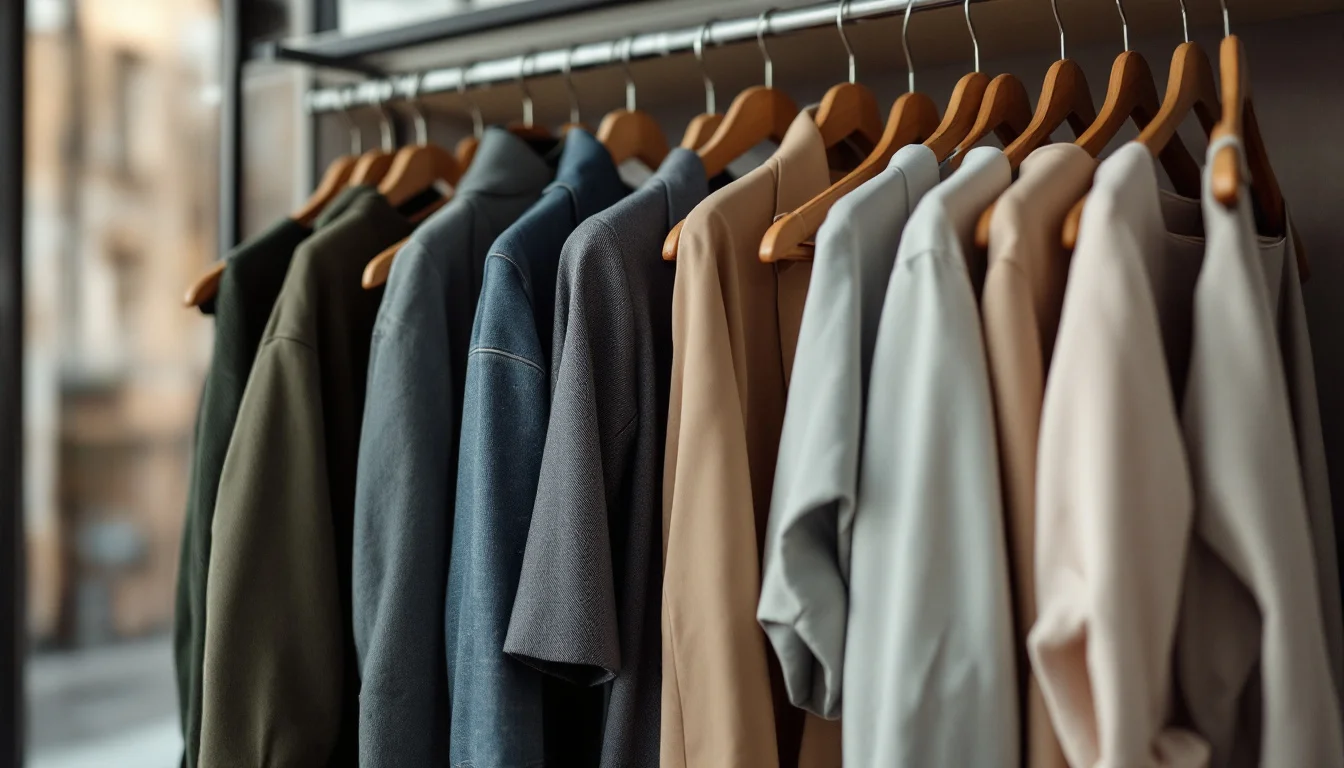
This tension between numerical limits and fluid personal style is efficiently resolved through strategic colour constraint rather than arbitrary item counts. One popular approach to building a cohesive minimalist wardrobe is to organize it around a limited colour palette (C&A capsule guide). This stylistic method often begins by selecting a couple of core base colours—for example, utilizing reliable shades like black, dark blue, or brown as your foundation. Next, you integrate one or two neutral colours, such as white, beige, or grey, to provide visual relief. Finally, you might incorporate a few distinct accent colours carefully chosen to suit your specific personal preferences. By regulating the overarching colour palette, every individual piece matches seamlessly with the others, ensuring that overall volume remains manageable without inducing the anxiety of a strict numerical quota.
How Do You Decide What to Remove From Your Wardrobe?
Transitioning to a curated closet requires a methodical, step-by-step approach to sorting existing garments, one that actively prevents the overwhelmed feeling that typically accompanies decluttering. The crucial first step in building a capsule wardrobe is surprisingly physical: you must take absolutely all clothes out of the wardrobe, spread them completely across the bed, and systematically confront the full volume of your inventory (C&A capsule guide).
The Three-Pile Sorting System
Once the garments are visually laid out, the editing process begins. You must sort every single item meticulously into three distinct piles: yes, no, and maybe (C&A capsule guide). The "yes" pile forms the immediate foundation of the new, streamlined wardrobe. The "no" pile is swiftly diverted for donation, recycling, or resale.
The Quarantine Strategy
The psychological hurdle for most individuals lies entirely in the ambiguous "maybe" pile. Rather than forcing a difficult immediate decision, this pile is intentionally stored away in a separate, isolated part of the wardrobe for the next three months (C&A capsule guide). This built-in buffer acts as an essential psychological safety net. If an item remains completely unworn throughout that entire three-month period, it can be confidently sorted out and permanently removed. This evidence-based approach removes the fear of premature disposal, relying on actual wear-data rather than emotional attachment.
The 2026 Architecture: Basics, Key Pieces, and 'Showponies'
Structuring the retained items efficiently requires categorizing your garments by their specific functional role rather than just identifying their fabric or basic garment type. To establish a versatile system, Elle NL works exclusively with three distinct types of items within a capsule wardrobe: key pieces, showponies, and fundamental basics.
Understanding how these three distinct categories interact is essential for achieving a harmonious daily rotation. Basics act as the quiet foundation, key pieces provide the structural aesthetic of the outfit, and showponies introduce flair and individuality without overwhelming the visual balance. When mapped against physical placement on the body, this categorization creates a reliable architectural matrix for daily dressing, ensuring that every garment serves a specific, deliberate purpose.
| Garment Placement | Basics (The Foundation) | Key Pieces (The Structure) | Showponies (The Flair) |
|---|---|---|---|
| Tops | Neutral t-shirts, simple long-sleeves | Tailored blazers, versatile fine-knit cardigans | Intricate blouses, brightly patterned accent tops |
| Bottoms | Classic straight denim, simple neutral trousers | More formal or tailored trousers, structured heavier jeans | Statement textured trousers, brightly coloured or printed trousers |
| Full-body pieces | — | Classic trench coats, versatile neutral jumpsuits, dresses | Elaborate kimonos, bold patterned duster coats |
By utilizing this framework, consumers can quickly identify missing functional elements in their collection and successfully avoid the common mistake of purchasing too many showponies and not enough supportive basics.
Storage and Care: Extending Fabric Lifespan
Because a smaller, highly curated wardrobe dictates that each individual item must endure more frequent wear, mastering physical storage techniques is critical.
Handling Tops and Bottoms
Traditional folding methods often secretly harm our most frequently worn garments. Elle NL advises against the common practice of stacking certain bottoms in piles inside the wardrobe. For materials prone to creasing, this storage method can create sharp folds and may contribute to unnecessary wear over time. Depending on the specific material of the garment, you should either carefully roll or hang these bottoms to maintain their structural integrity (Elle NL style guide).
Similarly, to proactively avoid constant ironing and preserve fabric strength over time, there is specific storage advice for t-shirts: simply roll the t-shirts up and keep them neatly organized in a basket rather than folding them into tightly packed stacks.
Advanced Hanging Techniques
The type of hanger utilized plays a vital, often overlooked role in long-term garment preservation. Elle NL advises hanging delicate showpieces on a hanger specifically equipped with a suede or fabric cover; this crucial step actively prevents unwanted snags or permanent distortion of the shoulders over time. Furthermore, when dealing with heavier overall pieces—which specifically include jumpsuits, dresses, coats, trenchcoats, duster coats, and kimonos—it is imperative to hang them exclusively on sturdy hangers that feature a wide back (Elle NL style guide). This robust support ensures heavy fabrics remain properly draped. For items that are too heavy for a hanger, or that need to be stored for an extended period, Elle NL recommends using a garment cover, which also protects against dust, moths, and light. Implementing these meticulous storage protocols helps preserve high-quality garments over several seasons.
FAQ: Boundaries of the Capsule Wardrobe
Do gym clothes and sportswear count toward the capsule limit?
Sportswear does not need to be included in the core capsule, though the minimalist principles—including a restricted colour palette—can equally be applied to athletic gear to maintain visual harmony and make integrating activewear into casual daily life much easier (C&A capsule guide).
Does the capsule system apply to everyday underwear and socks?
Underwear and socks do not need to be included in a capsule wardrobe, though the minimalist principles can be applied to them too (C&A capsule guide). They remain separate from the primary visual architecture of your outfits.
Are formal party dresses part of the everyday rotation?
Special occasion wear, such as party dresses, does not need to form part of your everyday capsule (C&A capsule guide). Retaining these items for specific events prevents them from disrupting your core everyday aesthetic.
Conclusion: The Wardrobe as a Living System
A sustainable closet in 2026 demands fluid adaptation rather than stagnant curation. As corporate environmental reporting requirements take effect across the European fashion industry under the ESPR, individual consumer closets can reflect this shift by prioritizing fabric longevity and mindful consumption. By embracing strategic constraints and committing to garment maintenance, modern consumers transform their everyday dressing routines into an intentional practice. While a single household's wardrobe will not directly offset industrial-scale textile waste, this dynamic approach proves that personal style benefits greatly from deliberate, conscious refinement.