The Year-Round Minimalist Closet: How to Build a 2026 Capsule Wardrobe Without Starting Over
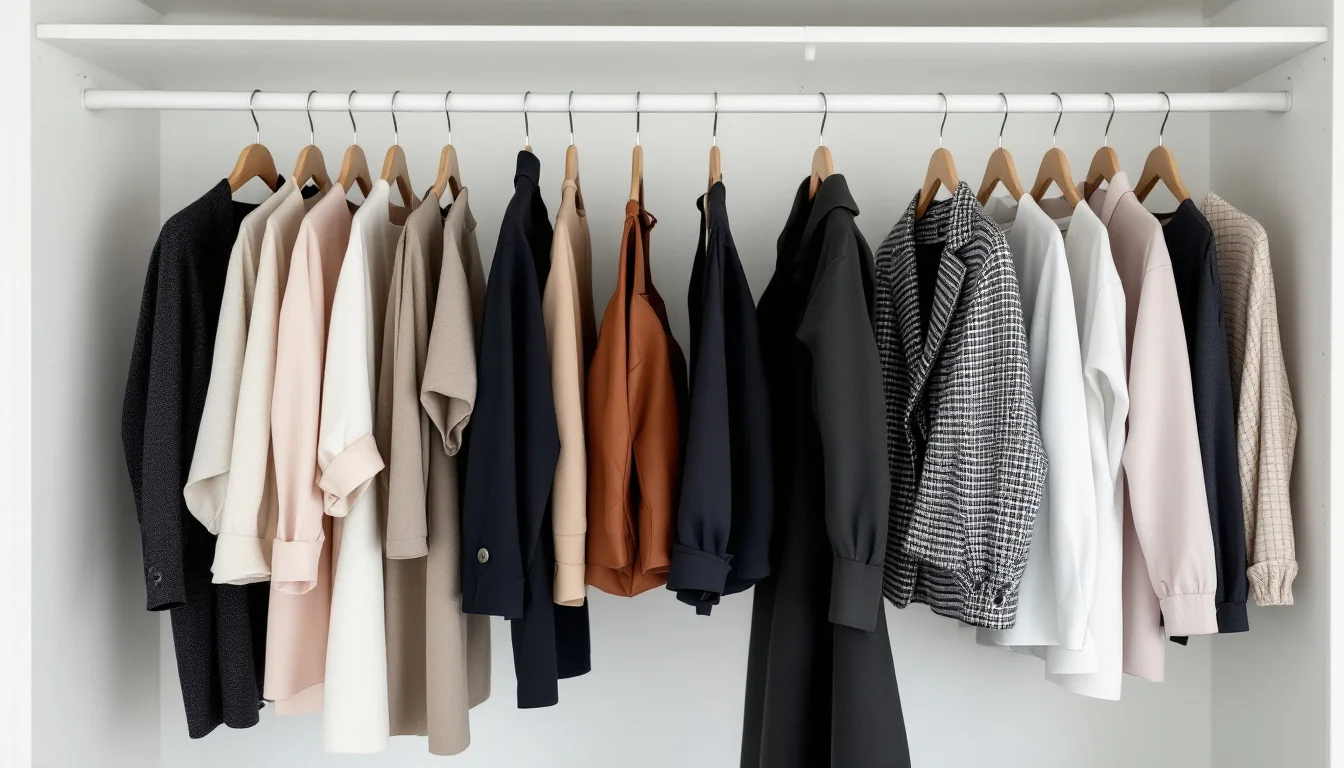
What Is a Year-Round Capsule Wardrobe?
For decades, the fashion industry has operated on a strict calendar of reinvention, pushing consumers to overhaul their closets every spring and autumn. This cycle requires significant financial investment and organizational effort, often resulting in cluttered spaces filled with isolated pieces that rarely work together. A year-round capsule wardrobe aims to replace these four separate seasonal collections with a single, highly functional core system.
By establishing a permanent foundation, the modern closet is adapted to temperature changes through strategic layering and minimal seasonal swapping rather than complete reconstruction. As styling experts often note, the most impactful wardrobes are built not on quantity, but on clarity.
Moving away from trend-heavy seasonal hauls toward a continuous system allows for greater versatility. It requires fewer garments overall. Building this cohesive collection in 2026 requires understanding the underlying architecture of a wardrobe, treating clothing as interconnected structural assets rather than standalone, disposable purchases.
Key Takeaways:
- The Foundation: A 22-piece core collection.
- The Architecture: A three-layer system (base, mid, outer).
- The Palette: 3 neutral base colors and 2 accent colors.
- The Rule of Three: Every new item must pair with at least three existing pieces.
- The Rotation: A 20% (4-5 piece) seasonal swap.
- The Maintenance: A strict one-in-one-out replacement rule.
How Do You Build a 22-Piece Foundation?
The transition to a continuous closet begins with establishing strict quantitative boundaries. The framework is built upon a suggested 22-piece year-round capsule foundation. These garments are described as the permanent "anchors" of the wardrobe—reliable, high-quality items designed to be worn across every season regardless of shifting weather patterns.
It is worth noting that general definitions of a capsule wardrobe describe "typically 30 to 50 items"; the 22-piece figure is this guide's specific year-round foundation, not a universal industry standard.
The Three-Layer System
To ensure these 22 anchors function across varying climates, the wardrobe must be engineered around a specific styling architecture. Rather than buying separate heavy garments for winter and light garments for summer, the system relies on building outfits in three distinct layers:
- The base layer: Foundational pieces like a tank top or a standard tee. These sit closest to the skin, functioning as standalone tops in hot weather or breathable undergarments during colder months.
- The mid-layer: Transitional garments such as a classic sweater or a tailored blazer. These pieces provide adjustable insulation and add structural definition.
- The outer layer: Protective outerwear like a coat or a jacket, designed to seal the system against wind and cold.
Reducing Seasonal Dependencies
By utilizing this three-layer method, the core pieces can transition from winter to summer. A base layer tee worn under a heavy wool coat in December becomes the primary top when paired with lightweight trousers in July.
This structural approach reduces the need for season-specific core items, ensuring every foundational piece earns its place in the closet twelve months a year.
What Is the 3+2 Palette and the Rule of Three?
A minimal wardrobe cannot function if the pieces visually clash. Without a massive inventory to draw from, every top must pair seamlessly with nearly every bottom. To achieve this, the curation process requires strict visual and functional guidelines.
The 3+2 Palette Formula
Visual cohesion relies on disciplined color selection. The year-round capsule methodology advises choosing exactly three neutral base colors and two accent colors. The neutral bases—such as navy, camel, or charcoal—form the structural bulk of the wardrobe. The two accents provide controlled variation.
According to general capsule guidelines, adhering to this specific color palette is intended to reduce most clashing combinations. Because the accents are selected to complement the established neutrals, the probability of pulling two incompatible items from the closet is reduced, simplifying the morning routine.
The Rule of Three Gatekeeper Test
Maintaining the integrity of the foundation requires a rigorous screening process for any potential new addition. The framework employs a "Rule of Three" test as a mandatory gatekeeper. Before adding a new piece to the collection, the buyer must ask whether that specific item can be worn effortlessly with at least three other things already owned in the capsule.
If a garment cannot pass this threshold, it is rejected, regardless of its individual appeal. This test prevents the introduction of "orphan pieces"—items that look beautiful on a hanger but require purchasing entirely new outfits to wear them. By strictly enforcing this rule, the wardrobe remains an interconnected ecosystem rather than a fractured collection of impulse buys.
How Does the 20% Seasonal Swap Work?
The most significant operational mechanism of the year-round capsule is how it handles the passage of time. The framework entirely discards the concept of a seasonal rebuild. Instead, it relies on a continuous system where roughly 20% of the pieces are exchanged at each seasonal turn, while the core anchor collection stays entirely constant.
The Logistics of Partial Rotation
Operating on a 22-piece foundation, a 20% rotation means swapping out only four to five context-specific items every few months. This micro-adjustment prevents wardrobe fatigue while keeping the bulk of the closet active. The focus shifts strictly to textiles and footwear, adapting the constant base layers to the current climate reality.
The Seasonal Swap Protocol
To execute this continuous rotation without disrupting the permanent anchors, the swaps are mapped across specific functional categories:
| Season | Items Swapped In | Items Swapped Out | Fabric & Palette Shift |
|---|---|---|---|
| Spring | Lighter layers, trench coats | Heavy knits, wool coats | Transitioning from heavy insulators to breathable mid-layers. |
| Summer | Sandals | Boots, loafers | Prioritizing maximum ventilation and lighter visual weights. |
| Fall | Knits, loafers | Lighter layers, sandals | Reintroducing structured warmth and closed-toe footwear. |
| Winter | Wool coats, boots | Trench coats | Maximizing thermal retention and weather resistance. |
By following this protocol, the transition between distinct climates requires minimal logistical effort. The heavy wool coat is stored away in favor of the trench, and sandals are traded for loafers, but the foundational tees, blazers, and trousers remain actively in rotation, ensuring the wardrobe adapts organically.
Which Trends Fit a Minimalist Capsule?
Adopting a highly disciplined, permanent wardrobe does not require abandoning contemporary aesthetics. A successful year-round closet filters current trends through the lens of longevity, incorporating only those movements that align with minimal principles and pass the pairing test.
Elevated Basics for Current Aesthetics
Several enduring contemporary aesthetics are identified as inherently capsule-compatible: funnel-neck jackets, V-neck knits, stovepipe jeans (straight-leg denim), sustainable materials, and the overarching aesthetic of quiet luxury. These elements succeed within a minimal framework because they function as elevated basics rather than fleeting statement pieces.
Stovepipe jeans, for instance, provide a modern structural silhouette that pairs just as easily with a summer base layer as it does with a heavy winter knit.
The Funnel-Neck Anchor
The standout piece for integrating modern aesthetics into the core collection is the funnel-neck jacket or coat. Identified as a key contemporary staple, the garment's structured neckline is described as instantly modernizing classic tailoring.
When swapped in during the autumn or winter rotation, a funnel-neck outer layer upgrades the entire silhouette of the capsule without requiring new trousers or mid-layers to support it. By leaning into quiet luxury and sustainable materials, these carefully selected trends act as durable investments that may survive well beyond the current calendar year.
How Do You Calculate Cost-Per-Wear?
The shift from a seasonal rebuild to a permanent anchor system requires a fundamental change in how clothing is valued. When operating a small core closet, durability becomes a mandatory functional requirement rather than a luxury. This necessitates adopting an investment mindset driven by the cost-per-wear metric.
The Universal Economic Principle
To illustrate the economics of minimalist wardrobes, consider a financial comparison based on utilization. Consider the purchase of a high-quality blazer. Because it functions as a highly versatile mid-layer within the year-round system, it might be worn dozens of times, bringing the notional cost-per-wear down significantly.
Conversely, a cheaper trendy top that cannot pass the pairing test might only be worn a few times before being discarded or pushed to the back of the closet, resulting in a substantially higher cost-per-wear. By reframing the budget around utilization rather than the initial price tag, a smaller closet naturally justifies higher-quality, sustainable materials that withstand continuous rotation.
The One-in-One-Out Rule
To protect this financial and spatial investment over time, the capsule must be actively defended against wardrobe creep. This is managed through the strict application of the one-in-one-out rule. For every new piece brought into the closet, one old piece must permanently leave the wardrobe.
This boundary helps keep the collection at roughly its 22-piece capacity if the rule is followed consistently. It forces the consumer to carefully evaluate whether a new purchase is genuinely superior to the asset it is replacing.
Conclusion: What Does a Year-Round Capsule Achieve?
Mastering a year-round capsule offers an alternative to typical consumer behavior. By shifting focus from the relentless pursuit of seasonal trends to the careful management of a core foundation, the daily act of dressing transforms. It becomes an exercise in efficiency.
Enforcing strict color palettes and rigid purchase testing ensures that garments serve as durable, interconnected assets rather than disposable commodities. Ultimately, this approach reclaims both financial resources and mental bandwidth, suggesting a future where personal style relies on longer-lived, highly adaptable garments.